.png)
Latest Posts





.jpg)
The world is evolving, and so is technology.
Discover how we can help you build smarter, safer, and scalable digital solutions.
Get Free Consultation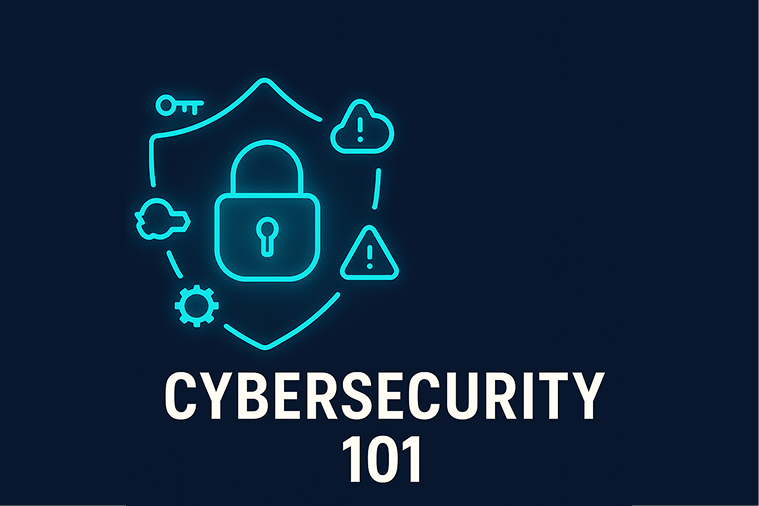
Cybersecurity 101: Essential Practices Every Business Must Follow
Cybersecurity is no longer optional — it’s a business necessity. In 2025, cyberattacks are growing in scale and sophistication, targeting businesses of every size. The good news? With the right practices, organisations can significantly reduce risks and protect sensitive data. The following case studies highlight how companies across industries are successfully implementing essential cybersecurity practices.
🔹 Case Study 1: Strong Passwords & MFA in Finance
Challenge: A mid-sized bank faced increasing phishing attacks on employee accounts.
Solution: The bank implemented company-wide multi-factor authentication (MFA) and enforced strict password policies.
Outcome: Account breaches dropped by 70% within the first year.
🔹 Case Study 2: Regular Backups in Retail
Challenge: A retailer was hit by ransomware that encrypted customer data.
Solution: Automated, encrypted backups were deployed both on-site and in the cloud.
Outcome: Data was restored in hours with minimal downtime and losses.
🔹 Case Study 3: Employee Awareness in Healthcare
Challenge: Staff at a hospital often clicked on phishing emails, risking patient data.
Solution: The hospital launched cybersecurity awareness training and phishing simulations.
Outcome: Successful phishing attempts reduced by 60% in six months.
🔹 Case Study 4: Continuous Monitoring in Manufacturing
Challenge: A manufacturer needed to protect IoT-connected devices from cyber threats.
Solution: Deployed a continuous monitoring system with real-time alerts.
Outcome: Prevented multiple intrusion attempts, protecting critical production systems.
🔹 10 Essential Cybersecurity Practices for Every Business
- Use strong, unique passwords & MFA.
- Keep software and systems updated.
- Back up data regularly and securely.
- Train employees on phishing and threats.
- Restrict access with least-privilege policies.
- Secure Wi-Fi and networks with encryption.
- Use endpoint security tools.
- Encrypt sensitive data in transit and at rest.
- Create an incident response plan.
- Monitor systems continuously for anomalies.
🔹 The Bottom Line
Cybersecurity isn’t just an IT issue — it’s a business survival strategy. By following these essential practices, businesses can stay resilient in an era of growing cyber threats.
At NextGen, we help organisations design and implement cybersecurity strategies that keep their data, employees, and customers safe.


